
Ultra High Net Worth Travel Preferences: Luxury or Strategy?
What Does the Ultra High Net Worth Concept Mean?
Ultra High Net Worth (UHNWI) is a term used to describe individuals with a net worth of $30 million or more. People in this segment are not simply high-income earners; they typically possess global investment networks, multi-layered corporate structures, and international responsibilities.
For this reason, Ultra High Net Worth travel preferences differ significantly from ordinary luxury expectations. These preferences are not primarily about comfort — they are built around strategic mobility.
Global Mobility: Freedom of Time and Location
For the UHNWI segment, travel is not a convenience — it is an operational necessity. Within the same week, their schedule may include:
an investment meeting in London
a real estate negotiation in Dubai
a fund management gathering in Monaco
Commercial flight systems can restrict this level of mobility. Layovers, delays, and fixed departure times limit global flexibility.
Private jet usage, on the other hand, maximizes mobility by offering:
direct flights
access to alternative airports
complete schedule flexibility
Privacy: A Wealth Protection Strategy
For Ultra High Net Worth individuals, information security is critical. On commercial flights, there are:
public spaces
crowded terminals
unknown passenger profiles
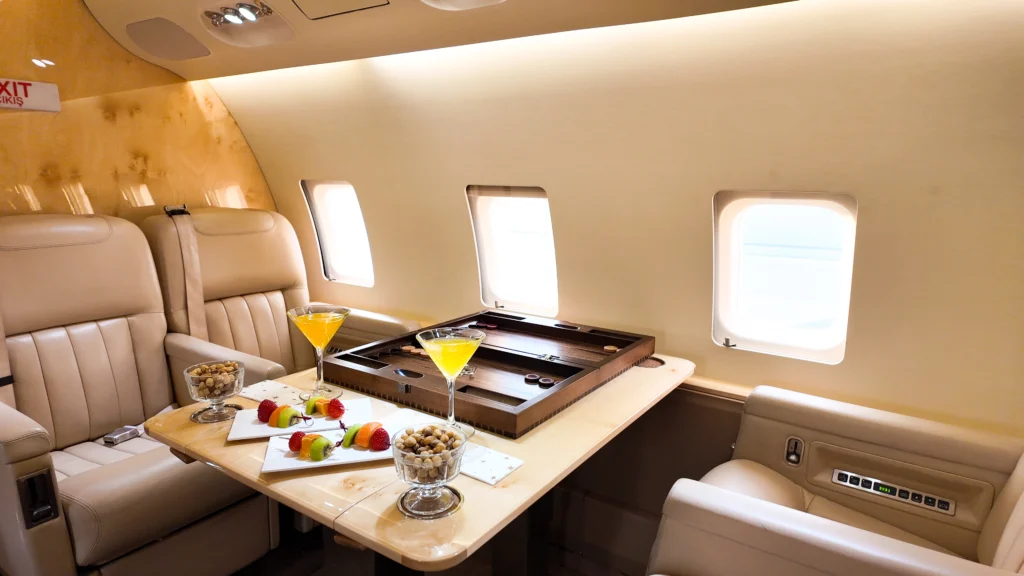
A private jet environment is fully controlled. Strategic documents can be reviewed, investment meetings can take place during the flight, and third-party risk is minimized.
This is not luxury — it is a risk management approach.
The Financial Value of Time
For UHNWI individuals, time directly generates financial value. A one-hour delay can result in:
a missed investment opportunity
the loss of a bidding process
reduced market advantage
Therefore, Ultra High Net Worth travel preferences focus primarily on time optimization.
Multiple Residences and a Global Lifestyle Model
Many UHNWI individuals have:
residences in multiple countries
companies across different jurisdictions
international social and business networks
This lifestyle requires flexible and rapid transportation. Private jets align perfectly with this multi-centered global structure.
The Psychological Factor: Control and Comfort
For high net worth individuals, a sense of control is essential. Airport congestion, waiting times, and schedule uncertainty can create stress.
Private jet operations provide:
VIP terminal access
controlled boarding processes
a personalized cabin environment
This is not about display — it is about quality of life.
Luxury or Strategy?
From the outside, private jet usage may appear to be pure luxury. However, when examining Ultra High Net Worth travel preferences, the decision is typically driven by:
time optimization
risk reduction
privacy protection
operational flexibility
In most cases, the choice is not emotional — it is rational.
The Influence of Corporate and Family Structures
UHNWI individuals manage not only their own travel but also that of family members and senior executives. A private jet allows these groups to travel together safely and efficiently.
This provides advantages in both security and coordination.
Global Trends
In recent years, global mobility trends show a significant increase in private jet usage among the UHNWI segment. In particular:
heightened security sensitivity after the pandemic
the need for flexible travel
the growing importance of time optimization
have strengthened this preference.